How to Select Raw Materials for Forged Grinding Balls
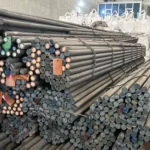
Forged grinding balls are commonly produced from steel bars or billets. Different steel grades have different chemical compositions, and after forging and heat treatment, they can develop very different properties.
More importantly, there is no single steel grade that is ideal for every mine.
Copper ore, gold ore, iron ore, and other applications can create very different grinding conditions. Mill size, ball diameter, impact intensity, and grinding circuit also matter.
For this reason, raw material selection should start with the actual operating conditions rather than simply choosing the steel with the highest alloy content.
I. What Do Manufacturers Look at First?
When steel bars or billets arrive for production, there are several things we need to understand before they enter the forging process.
Chemical composition is one of the most basic checks.
We also look at material cleanliness, internal quality, microstructure, dimensions, and surface condition.
These may sound like routine details, but they have a direct influence on what happens later.
For example, significant segregation or internal defects in the steel will not simply disappear during forging and heat treatment. For grinding balls that are exposed to repeated impact, some internal defects can eventually become potential crack initiation points.
That is why raw material control is the first important quality checkpoint in grinding ball manufacturing.
II. Why Is Carbon Important?
Carbon is one of the key elements in grinding ball steel.
In simple terms, carbon contributes to the hardness and strength that the steel can achieve and is an important part of the material’s wear resistance potential.
But there is an important point here: more carbon does not automatically mean a better grinding ball.
Increasing carbon can increase hardness potential, but toughness also needs to be considered.
Grinding balls do not only wear inside a mill. They are constantly exposed to impacts between balls and between balls and ore.
In high-impact applications, a material that is extremely hard but lacks sufficient toughness may have a greater risk of cracking or breakage.
That is why carbon is considered together with other alloying elements, ball diameter, and the heat treatment process.
III. Why Is Chromium Commonly Used in Grinding Ball Steel?
Chromium is another common alloying element in grinding ball materials.
One of its important functions is improving hardenability, which affects how the steel develops hardness and microstructure during heat treatment.
This becomes particularly important for large-diameter grinding balls.
For example, a smaller ball may be relatively easy to harden through the required depth. As the ball gets larger, however, the surface cools faster than the core during quenching.
If the material does not have sufficient hardenability, the result may be relatively high surface hardness but insufficient hardness deeper inside the ball.
For large forged grinding balls, therefore, it is not enough to ask how many HRC can be achieved at the surface. We also need to consider whether the material can develop the required hardness and structure throughout the ball.
IV. What About Manganese and Silicon?
Carbon and chromium are not the only elements that matter.
Manganese and silicon also contribute to the properties of the steel.
Manganese can influence strength and hardenability, while silicon is associated with strength and deoxidation during steelmaking.
These elements are normally considered as part of the overall material system rather than individually.
This is also why it is difficult to say that one steel grade is automatically better simply because it contains more alloying elements.
The elements interact with each other, and their final effect also depends on forging and heat treatment.
V. Why Isn’t the Highest Alloy Content Always the Best Choice?
This is a common misunderstanding when comparing grinding ball materials.
It may seem logical that:
Higher alloy content → higher hardness → better wear resistance.
Real-world grinding conditions are not quite that simple.
Grinding ball material selection is about finding a balance.
If the material is designed primarily for very high hardness and wear resistance but does not have enough toughness, it may be more vulnerable under heavy impact.
On the other hand, if toughness is emphasized too much and hardness is insufficient, wear may become the limiting factor.
What matters to us is how the material will perform inside the customer’s mill.
The goal is not the highest alloy content. The goal is the right balance of hardness, wear resistance, and impact resistance for the application.
VI. Why Does Ball Diameter Affect Material Selection?
Ball diameter is another practical consideration.
A 40 mm ball, an 80 mm ball, and a 150 mm ball do not necessarily have the same heat treatment requirements, even if they are made from the same steel grade.
As the ball becomes larger, the difference between surface and core cooling during quenching generally becomes more significant.
This makes hardenability increasingly important for larger grinding balls.
When selecting a material, ball diameter and heat treatment need to be considered together.
Rather than selecting one steel grade first and trying to make it work for every size, it is often better to consider the material and manufacturing process as a complete system.
VII. Why Does Steel Cleanliness Matter?
When we talk about “clean” steel, we are mainly referring to non-metallic inclusions and other metallurgical defects inside the material.
A steel bar can look perfectly normal on the outside while still containing internal imperfections.
For grinding balls, this matters because they are exposed to repeated impact and cyclic loading during operation.
If significant inclusions, internal cracks, or other defects are present, they can potentially become locations where cracks initiate during long-term service.
This is why chemical composition is only part of raw material control. Internal quality matters as well.
VIII. Surface Quality Still Matters
Internal quality is important, but the surface of the raw material should not be overlooked.
Visible cracks, seams, folds, or other surface defects can remain in the material and may affect the finished grinding ball after heating and forging.
Raw materials therefore need to be inspected and screened before entering production.
It may not look as impressive as forging or heat treatment, but this step can prevent many problems later in the manufacturing process.
IX. Why Does the Original Microstructure Matter?
The condition of the steel before forging can also influence how it behaves during heating, forging, and quenching.
We want the raw material entering production to be as consistent as possible.
More consistent raw material makes the manufacturing process easier to control and helps maintain more stable hardness, microstructure, and batch-to-batch performance.
This is why a chemical composition report alone does not tell the whole story.
Meeting the chemical specification is only the starting point.
X. Material Selection Should Start with the Mine
For us, one of the most important questions when selecting raw material is:
Where will the grinding balls actually be used?
We may need to understand the ore characteristics, mill size, ball diameter, grinding method, and impact conditions.
Some mines are more concerned with wear resistance. Others have a much stronger focus on resistance to breakage.
For large mills using large-diameter balls, hardenability and internal material quality may become particularly important.
For high-impact applications, toughness cannot be overlooked.
This is why we prefer to select materials based on actual operating conditions rather than using one fixed steel grade for every customer.
XI. Raw Material and Heat Treatment Are Closely Connected
Choosing the right steel is only part of the process.
The final properties of the grinding ball also depend on heating, forging, quenching, and tempering.
A simple way to look at it is:
The material determines what is possible; the manufacturing process determines how muc
“`
Message us for more information